
We all know that many people struggle with life however there are always torchbearers who lead humanity to a more liberated experience. These are some of the key people who have helped influence my thinking towards a more practical whole systems approach. Towards integration. The main scientific approach of our age has been towards reductionism and specialisation, which places us all at great risk both individually and collectively. I’ve worked with our team to develop more practical whole systems well-being programs which helps the whole person by integrating ageless wisdom with a wide variety of scientific, philosophical, and literary disciplines.
This has helped to understand the innate and precise coherence of our living systems including the mathematics of the Golden Ratio. This coherence applies across the spectrum from cosmology through to quantum biology. Life consistently expresses through these precise harmonics, which we can learn to harness for optimal individual and collective wellbeing. Some of these people are renowned for spirituality, when an open mind would suggest they were actually scientists who comprehended the innate wisdom of life, and the emergent sustainability and wellbeing involved with what we commonly call spirituality.
My list of people who have influenced me the most in my work includes:
Albert Einstein – physics and humanities
Albert Szent-Györgyi – medicine, vitamin C, nature of water Nobel prize
Bruce Lipton – Stem Cell research and epigenetics
Dr Deepak Chopra – Quantum healing, holistic wellbeing
Gerald Pollock – Fourth phase water
Maseru Emoto – Crystallography, Structure of water
John Lennon – Poetry, music
Jesus the Nazarene – compassionate wisdom
Buddha – Compassion, Middle path
Francis Bacon – Science, Literature, Humanities
Pythagoras – Science, philosophy and wellbeing
Plato – Philosophy
Da Vinci – art and science, water systems
Socrates – philosophy
Nassim Harumein – integrated field theory
Lao Tsu – Taoism
Erwin Schronenberger – physics Nobel prize
Max Planck -physics Nobel prize
Homer – classics
Steve Jobs – Integrated operating systems
Buckminster Fuller – systems theorist, futurist (build a new model)
Elisabeth Sauhtoris – Living systems and evolution biologist
Helena Blavatsky – Theosophia
Koot Humi – compassionate wisdom
Konstantin Korotkov – bioenergetics, water systems
Vladimir Voeikov bioenergetics, water, live blood research
Dr James Wilson – Adrenal Fatigue
Otto Warburg – Oxygen, biochemistry 2 x Nobel prize
Fritz-Albert Popp – photobiology
Luc Montagnier – medical Biology
Yogananada – Yoga science
Dalai Lama – Spiritual leader, Nobel peace prize winner and non-violence advocate
Veda Austin- Water scientist and author of “the secret intelligence of water”
To learn more watch “The Global Health TV Show”
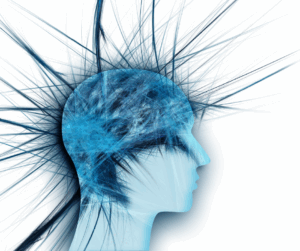
Why Are So Many People Exhausted, Anxious and Burnt Out? Understanding What’s Really Happening
We are seeing more people than ever presenting with reduced energy, anxiety and burnout — across every age group and stage of life. This is no longer confined to high-pressure professions or major life crises. It’s showing up in teenagers, parents, business owners and retirees alike.
But burnout isn’t simply about being busy. Anxiety isn’t just worry. And reduced energy isn’t laziness.
These are signs of a nervous system that has been under sustained load for too long.
In this article, we explore what these conditions actually feel like — emotionally, physically and mentally — what is happening inside the brain, and why modern life is making us more vulnerable than ever. Most importantly, we look at what helps restore balance.

Why Do I Feel So Much? Understanding the Link Between Emotions and the Body
Emotions aren’t just thoughts — they are physical experiences that move through the body. Tight chests, tense shoulders, fatigue, and overwhelm are often signs of a nervous system under strain. Understanding the connection between emotions and the body can reduce self-criticism, build resilience, and support whole-person health.
Continue Reading Why Do I Feel So Much? Understanding the Link Between Emotions and the Body

Burnout Isn’t One-Size-Fits-All: Here’s What You Need to Know
Burnout is more than feeling tired after a busy week. It is a recognised response to prolonged, unmanaged stress that can affect physical health, mental wellbeing, and workplace performance. While commonly associated with heavy workloads, burnout develops from a complex interaction between pressure, lack of control, emotional demands, and insufficient recovery. It does not look the same for everyone — and understanding its early signs is key to preventing long-term health consequences. At Global Health, we take a comprehensive approach to identifying, managing, and supporting recovery from burnout.
Continue Reading Burnout Isn’t One-Size-Fits-All: Here’s What You Need to Know